
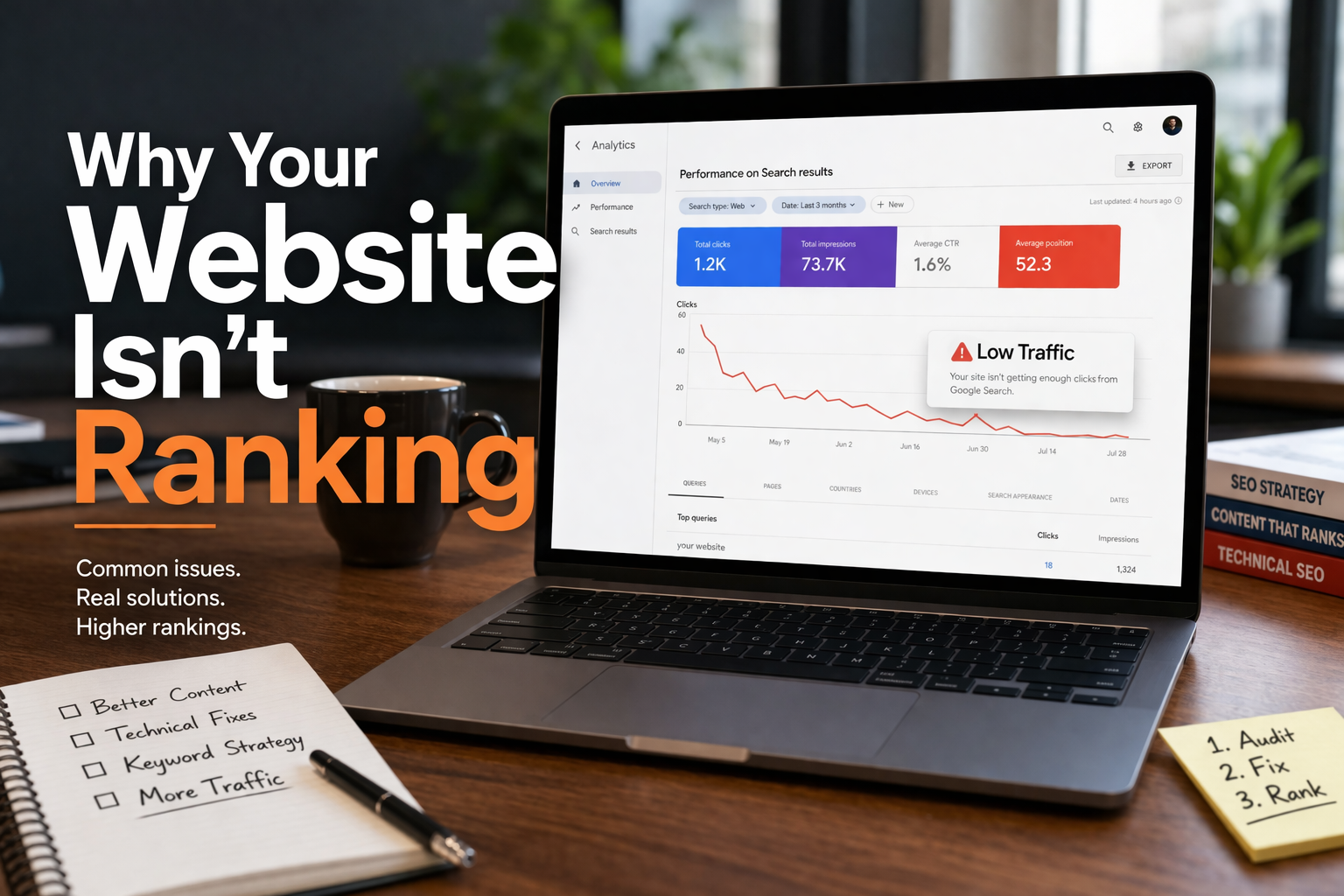

Introduction
You’ve created a website, added content, and maybe even promoted it on social media—but your site still isn’t ranking on Google.
This is a common issue faced by many website owners and businesses. The reality is that ranking on Google requires a structured SEO strategy, proper optimization, and consistent effort.
In this guide, you will understand exactly why your website isn’t ranking and how to fix these issues effectively.
1. You’re Targeting the Wrong Keywords
One of the most common reasons for poor rankings is incorrect keyword selection.
Many beginners target highly competitive keywords like “SEO” or “Digital Marketing,” which are dominated by established websites.
Solution
Focus on long-tail and low-competition keywords such as:
- SEO expert in Dehradun
- digital marketing course in Sudhowala
- SEO services for small businesses
These keywords are easier to rank and bring more targeted traffic.
2. You Don’t Understand Search Intent
Google prioritizes content that matches user intent.
Types of Search Intent:
- Informational (learning something)
- Commercial (research before buying)
- Transactional (ready to purchase)
Common Mistake
Creating promotional content for informational queries.
Solution
Match your content type with intent:
- Blogs for informational keywords
- Landing pages for transactional keywords
3. Weak On-Page SEO
Even high-quality content may not rank if it is not properly optimized.
Common Issues:
- Missing or incorrect H1 tags
- Poor title tags without keywords
- Weak meta descriptions
- Lack of internal linking
Solution
- Use your primary keyword in the title
- Maintain proper heading structure (H1, H2, H3)
- Add internal links to relevant pages
4. Technical SEO Problems
Technical issues can prevent search engines from properly crawling and indexing your website.
Common Problems:
- Slow loading speed
- Poor mobile responsiveness
- Broken links
- Missing XML sitemap
Solution
- Improve page speed
- Ensure mobile-friendly design
- Submit sitemap in Google Search Console
- Fix crawl and indexing errors
5. Lack of Backlinks
Backlinks are a major ranking factor. Websites with strong backlink profiles tend to rank higher.
Solution
Build quality backlinks through:
- Guest posting
- Business directories
- Social bookmarking
- Profile creation
6. Low-Quality Content
Content plays a critical role in SEO success.
Common Issues:
- Thin or short content
- Duplicate or copied content
- Lack of value for users
Solution
- Write in-depth content (1000+ words)
- Focus on originality and usefulness
- Structure content properly with headings
7. Expecting Immediate Results
SEO is a long-term process.
Reality:
- New websites may take 3–6 months
- Competitive niches may take longer
Solution
Stay consistent with your efforts and focus on long-term growth.
8. Not Tracking Performance
Without tracking, it is difficult to identify what is working and what needs improvement.
Tools to Use:
- Google Search Console
- Google Analytics
Metrics to Track:
- Organic traffic
- Keyword rankings
- Click-through rate
- Impressions
9. No Content Strategy
Publishing random content without planning can limit your growth.
Solution
Create a structured content plan:
- Target specific keywords
- Follow a content calendar
- Maintain consistency in publishing
10. Poor User Experience
User experience is an important ranking factor.
Issues:
- Difficult navigation
- High bounce rate
- Slow pages
Solution
- Improve website design and layout
- Make navigation simple
- Optimize loading speed